
 By
By By Juliane Judilla
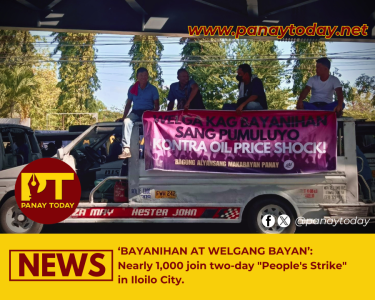
ILOILO CITY —Hundreds of Jeepney drivers and operators from different transport coalitions, alongside commuter and consumer groups, held a series of activities on Monday, March 9, calling for transport policies reform.
The mobilization was led by the No To PUV Phaseout Coalition (NTPPC) Panay and Pagkakaisa ng mga Samahan ng Tsuper at Operator Nationwide (PISTON) Panay. Activities included a petition signing held simultaneously at three transport terminals — Mohon in Oton, Tagbak in Jaro, and GT Mall in Pavia — followed by a press conference and a concluding picket protest in front of the regional offices of the Land Transportation Office (LTO) and the Land Transportation Franchising and Regulatory Board (LTFRB) Region 6 in Tabuc Suba, Jaro.
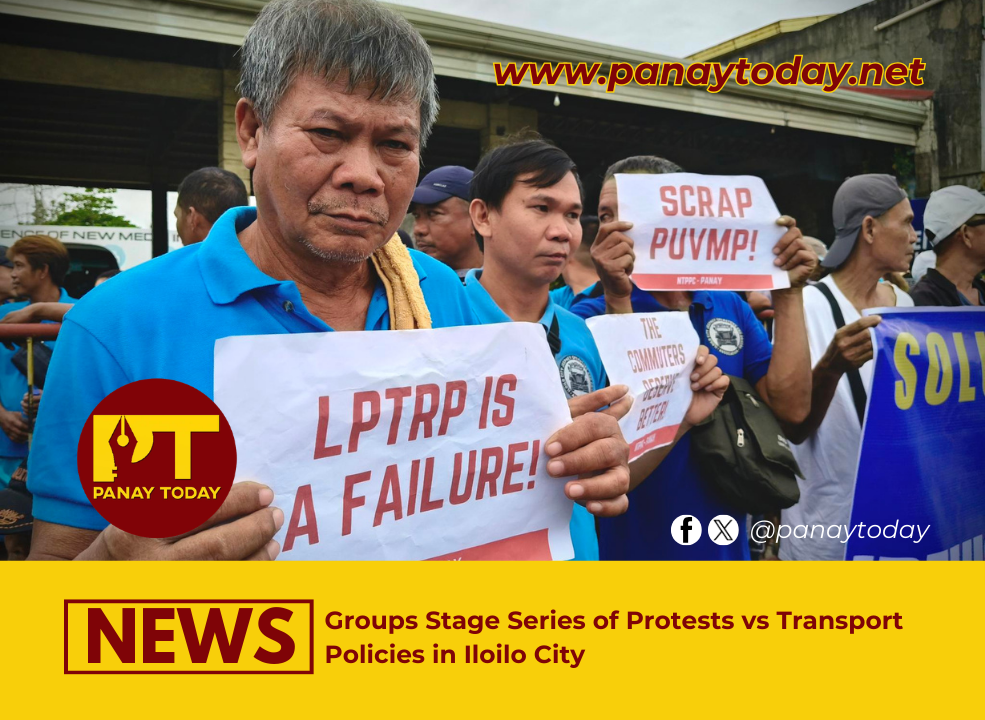
The groups demanded the renewal of five-year franchises for traditional jeepneys, the suspension of the Local Public Transport Route Plan (LPTRP), and the scrapping of the Public Utility Vehicle Modernization Program (PUVMP).
City Policy Limits Entry of First-Town Jeepneys
The Iloilo City government, through its Enhanced Local Public Transport Re-Route Plan (E-LPTRP), has mandated that only 25–40% of first-town Public Utility Vehicles (PUVs) are allowed to enter the city. Some of these vehicles are also restricted to designated terminals and transport hubs.
The policy is a mandatory component of the national Public Utility Vehicle Modernization Program (PUVMP). However, transport groups argue that it threatens the livelihood of 60–75% of first-town drivers and operators who primarily transport students, workers, farmers, and other commuters traveling to and from the city.
According to Elmer Forro of Bagong Alyansang Makabayan (Bayan) Panay and lead convenor of NTPPC Panay, more than 600 traditional jeepney units joined the day’s activities.
He said many of these units were unconsolidated vehicles and others had withdrawn from cooperatives.
‘IBALIK ANG AMON PALANGABUHIAN’
Protesters also highlighted issues currently faced by the transport sector such as overloading allegations, apprehensions conducted by the LTO against jeepneys, and the restriction of first-town public utility jeepneys from entering the city due to the LPTRP.
These concerns strengthened their main call: to allow traditional jeepneys to register and to suspend the LPTRP.
Warren Gangoso of Negros Panay United (NPU) said the city is already experiencing a shortage of jeepneys but has yet to effectively address the problem.
“Livelihood or harm to the people — which weighs more for the government?” he said.
Meanwhile, Junifer Ramos, a jeepney driver, argued that transport cooperatives should be held accountable, especially those that pushed drivers to consolidate but have yet to provide proper compensation.
“All politicians already have big businesses. Yet they still enter the transport sector and take away the livelihood of drivers and operators.” Ramos added that forcing drivers to join cooperatives has no realistic basis, since reported ₱500 daily salary from cooperatives is insufficient to support a family.
“If you’re paid 500 pesos, can you support a family of six? Eight?” he added.
Commuters Woes
The effects of the policy are also being felt by commuters.
During the morning rush hour, commuters crowded the steps of GT Mall in Ungka, Pavia, waiting for city-bound PUVs — a scene also observed at the other terminals.
For Trisha, a student from the University of San Agustin, commuting from her hometown of Maasin to the city takes one to two hours.
She described commuting as a daily struggle for students who are constantly racing against time.
“As a student, it’s a huge struggle for me because I have to take two rides every day, so I really run out of time, especially when I have morning classes,” she said.
She added that the difficulties of commuting go beyond time, affecting her daily expenses, particularly as prices of basic goods — especially food — continue to rise.
Consumer Groups Join the Call
The Panay Consumers Alliance also voiced support for the transport groups, urging the government to repeal policies that increase the burden on drivers.
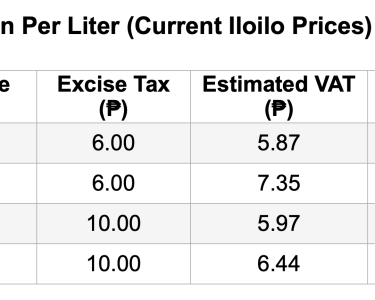
The group called for the scrapping of the Oil Deregulation Law, the 12% Value-Added Tax (VAT), and excise taxes on fuel, which they say contribute to rising gasoline and diesel prices.
Transport leaders and consumer advocates emphasized that these combined policies continue to intensify the economic pressure on drivers and commuters alike.