
 By
By By Josiah David Quising
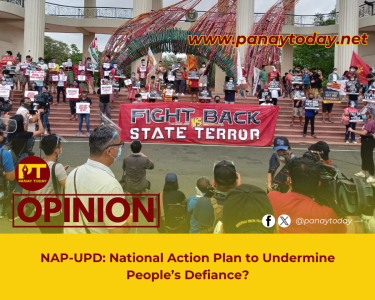
The Constitution itself recognizes the vital role of the youth in nation-building and mandates the State to encourage their active participation in public and civic affairs. Schools and institutions of higher learning occupy an indispensable role in cultivating the intellectual, moral, and civic capacities of young people. But what happens when these spaces of learning are turned into platforms for violent speech and threats to life? That is what red-tagging simply is.
In the case of Deduro vs. Vinoya (G.R. No. 254753, July 3, 2023), the Supreme Court declared that “red-tagging, vilification, labelling, and guilt by association constitute threats to a person’s right to life, liberty, or security.” Yet, despite this clear pronouncement from the Supreme Court, elements of the State and their alleged associates still continue to engage in red-tagging.
On 28 February 2026, a forum titled “Peace and Security Awareness Symposium” was conducted at Central Philippine University (CPU), Jaro, Iloilo City, as part of an orientation for students enrolled in the National Service Training Program (NSTP).
During the said forum, Ms. Zarmeen “Jingkay” Cartagena acted as the resource speaker. During her presentation, Cartagena called the National Union of Students of the Philippines (NUSP), Anakbayan, League of Filipino Students (LFS), and College Editors of the Philippines (CEPG), and other progressive organizations as front organizations of the Communist Party of the Philippines–New People’s Army–National Democratic Front (CPP-NPA-NDF).
It must be emphasized that these slanderous accusations are baseless and unfounded. None of the organizations have been declared in court to be involved with CPP-NPA-NDF or associated with any illegal activities.
Activists and development workers across the country repeatedly face similar threats, intimidation, and unfounded accusations. In Panay, activists were subjected to persistent harassment from the military. In December last year, the family of Alek, a student activist, member of Pamatan-on Kontra Kurapsyon (PAKK) and Panay Coordinator of the OIKOS Ecological Movement, was repeatedly visited by personnel of the Philippine Army’s 3rd Civil Military Operations Regiment, raising serious concerns about surveillance, intimidation, and the safety of human rights defenders in the region.
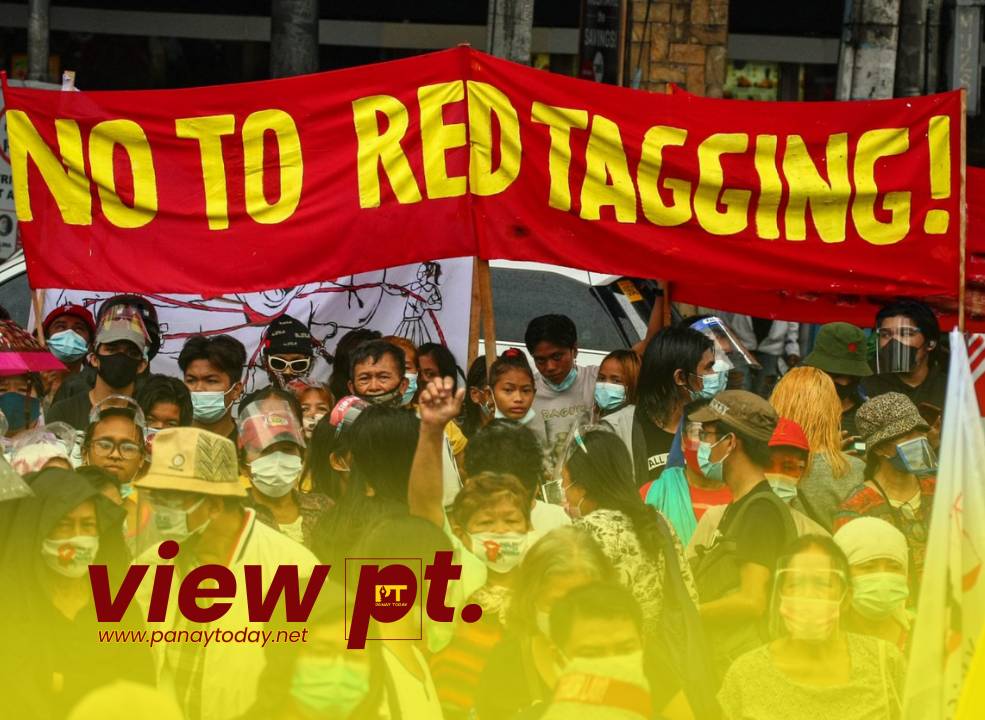
Red-tagging poses serious threats to life as these verbal accusations often evolve to physical harm. As reported by UN Special Rapporteur Irene Khan, red-tagging has resulted in the harassment, death, and disappearance of those tagged as communist-rebels or affiliated with them. In April 2020, long-time activist Jory Porquia was gunned down in his own home in Iloilo by unidentified assailants. This comes after years of red-tagging and public vilification where posters of Jory were scattered across the city linking him to the NPA. Jory had no criminal convictions or any pending cases making the accusations both unlawful and baseless. Meanwhile, his son, Lean, was charged with human trafficking but was eventually dismissed due to lack of evidence.
Students are members of the educational community whose rights are explicitly protected by law. Batas Pambansa Blg. 232, the Education Act of 1982, guarantees students the right to freely express opinions, form organizations, and participate in assemblies. Red-tagging student-led organizations undermine constitutional protections by stigmatizing lawful associations and discouraging students from participating in civic and political organizations, ultimately creating a chilling effect on legitimate exercises of free speech. This is a clear human rights violation as consistently flagged by the UN Human Rights Council in its July 2020 Report and by UN Special Rapporteur Irene Khan in 2025.
Red-tagging legitimate student organizations exposes students to the danger of murder and disappearance. This creates an atmosphere of insecurity and fear in a place where young students are supposed to feel safe. As emphasized by the Supreme Court in Secretary of National Defense, et al. v. Manalo, et al., (G.R. No. 180906, October 6, 2008), the right to security includes freedom from fear. Students have the right to live their lives free from fear.
The actions of Cartagena therefore goes against the responsibility of schools to promote a healthy academic atmosphere and safeguard the welfare of students, and ultimately endangers the lives of students. This should not be allowed to continue./PT
***
Atty. Josiah David F. Quising is a part-time professor at the Far Eastern University- Institute of Law and a human rights lawyer engaged in legal and advocacy work with civil society organizations. He is a co-founder of Project Gunita, an initiative that helps preserve and promote historical memory, especially in relation to the Martial Law era in the Philippines. In 2022, he became a fellow of the Young Budget Leaders Program, where he proposed the development of a centralized complaints monitoring system that was implemented in 2024 and has since contributed to enhancing the documentation of human rights cases at the Commission on Human Rights.