
 By
By On Earth Day, April 22, more than 60 Panayanons gathered at WS Lounge Lapaz, Iloilo City to tackle the most pressing issues in the region from ridge to reef.

Themed ‘Halin sa Ilaya, Pakadto sa Ilawod: Amligan ang Kapalibutan’, the multisectoral forum led by Panay Alliance of Concerned Citizens for Health and Environmental Protection (PACCEP), Oikos Ecological Movement – Panay, Masipag Visayas, and Aton Ang Kinse Alliance sought to localize the current state of the island’s natural resources and address the underlying factors towards the systemic environmental plunder.
Development aggression projects touted as contradictory, anti-environment
According to Alekzandria Padrones of Oikos Ecological Movement, while Panay Island is a biodiversity hotspot with species such as the Rafflesia speciosa, Visayan warty pig and hornbill, alongside protected areas and watersheds, it is faced with a ‘great contradiction’.
Padrones warned that the natural heritage of Panay is threatened by extractive mining and harmful projects she describes as ‘development aggression’.
“Aggression because under the guise of development, it will not care about the environment it destroys, or the human lives it kills,” Padrones stated, citing the Jalaur and Panay dams, Ajuy solar farm, Boracay bridge, Panay-Guimaras-Negros bridge, and Semirara open-pit mining as primary examples.
Padrones highlighted that the Philippines is ranks 5th most vulnerable to climate calamities and is the most dangerous country for environmental defenders within Asia. She stressed that with the current circumstances, collective action and resistance is needed more than ever to change such systemic problems.
Agrochemical hazards and mass poisoning incident recalled anew
Aida Fillone of Katilingban sang Mangunguma kag Mamumugon sa Bongbongan II (KAMMABO) emphasized that reliance on agrochemicals has brought great damage to farmers and the fields they till.
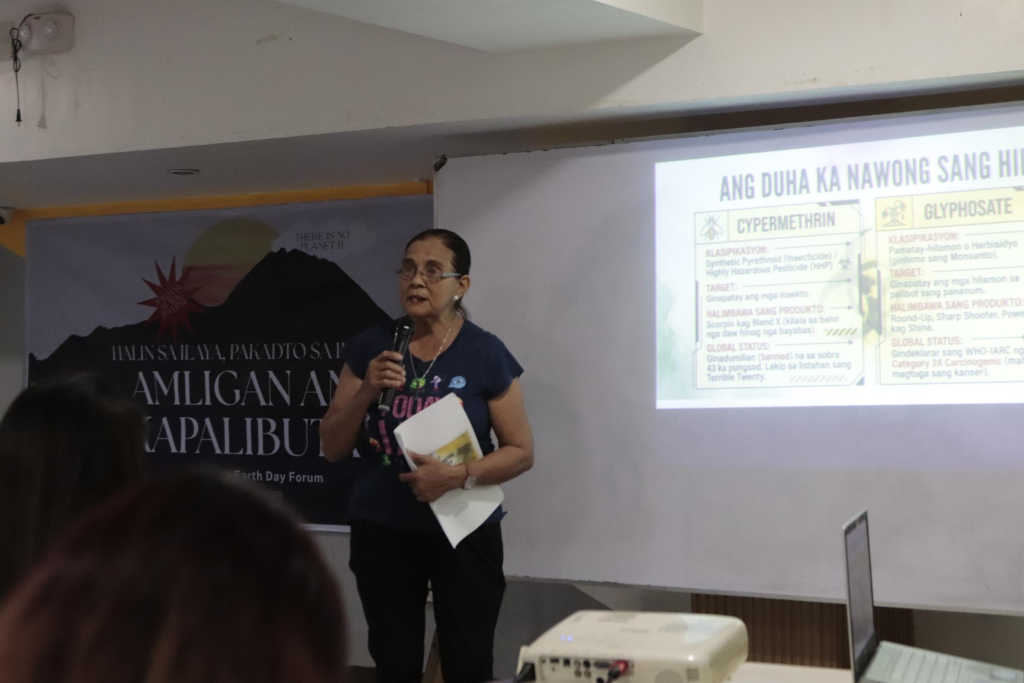
She recounts the Pis-anan mass poisoning incident in Antique, where 390 victims, mostly children, were hospitalized from cypermethrin fumes. Cypermethrin is a substance that is banned in 43 countries.
The forum also highlighted that glyphosate, linked by locals in Capiz as a cause for flooding in October 2025, is a known carcinogen. Because these highly hazardous pesticides (HHPs) are non-selective, they pose a severe threat to biodiversity. Their organization and allies push for agroecology, a ban against HHPs, and the establishment of buffer zones near schools and residential areas.
Amid SC standstill, group warns impending fisheries collapse
Tiffany Xu of Aton Ang Kinse Alliance reported that nearly one year has passed since groups filed appeals to the Supreme Court on the landmark Mercidar Ruling that allows commercial vessels to operate in municipal waters, yet no response has been issued.
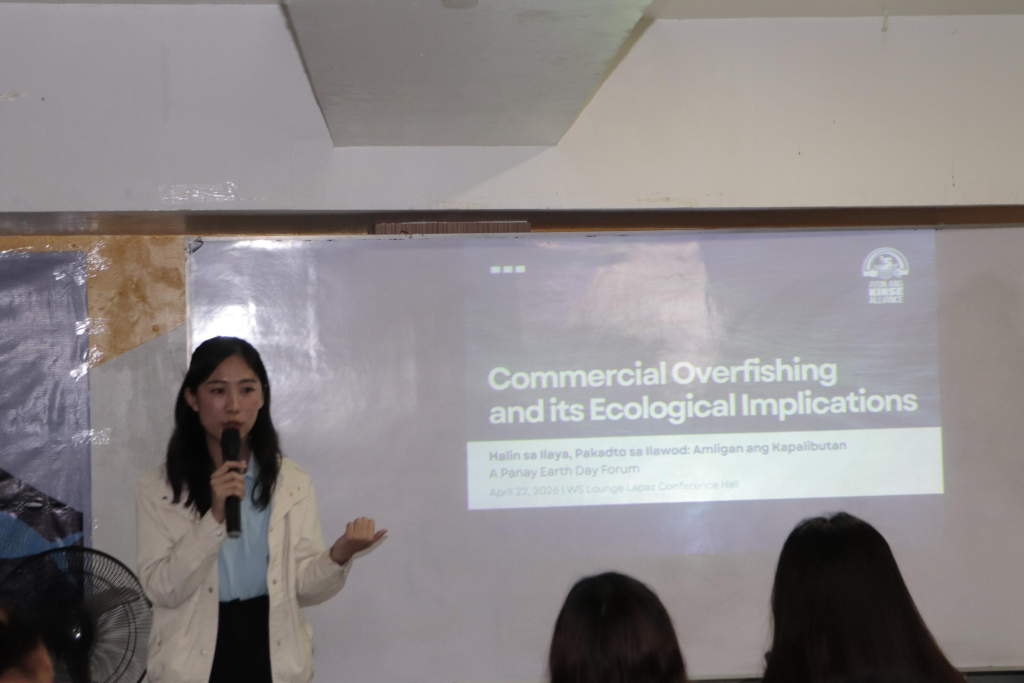
In the interim, large fleets continue to trespass in such waters, with Karagatan Patrol recording over 40,000 instances nationwide last year, including 2,000 in Western Visayas.
Xu warned that in addition to the more than 80% overexploited fishing grounds in the country, 45 million kg of fish is lost annually, excluding the tonnes of fish wasted from weak institutional support on post-harvest processing. If commercial overfishing continues, food web collapse and marine “dead zones” may allegedly occur.
She also argued that despite this, the current profit-driven economic framework is import-dependent and export-oriented, hence failing to benefit the Filipino people. In asserting the role of small-scale fisheries, Xu reiterated that municipal fisherfolk are the most important stewards of sustainable seas.
Local government representation and response
Hon. Rolito Cajilig, the Committee Chair for Agriculture for the Iloilo Provincial Board, was seen attending the forum.
During the open forum, he expressed his grave concern towards glyphosate and commercial fishing issues and signified his commitment to exploring legislative solutions. In his statement, Cajilig remarked that he will consult with several organizations in the compilation of data before presenting a privilege speech before the SP.
Solidarity action fuels push for environmental justice
In an act of solidarity, participants of the forum physically signed a unity statement denouncing the human rights violations and environmental plunder caused by corporate-driven projects alongside the ‘false green solutions’ of government authorities.
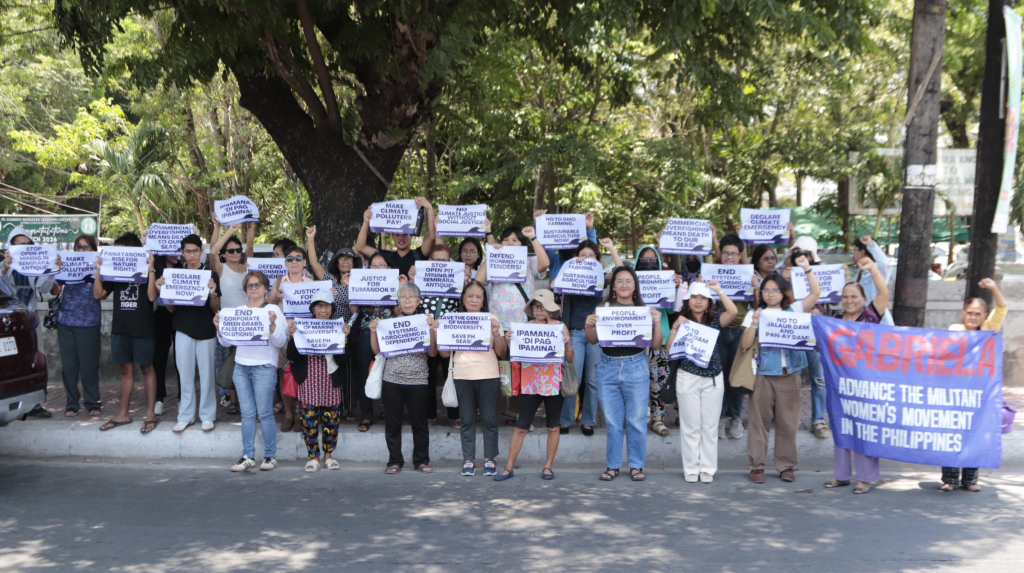
A symbolic silent protest was conducted by the sidewalk fronting St. Clements Church, Lapaz, Iloilo shortly after.