
 By
By By Juliane Judilla
When I think of comfort food, the first thing that comes to mind is KBL, an Ilonggo soup whose name is itself a memory: kadyos, baboy, langka.
Three humble ingredients, gathered into a pot, softened by fire, lifted by the scent of tanglad, sharpened by the quiet sourness of batwan— a taste that belongs only to these islands.
KBL is one of the flavors that placed Iloilo on the map of gastronomy. For the Ilonggo diaspora, it is not a map they remember, it is a home they return to.
It is the sound of ladles against tin bowls, the stretch of a table made longer to fit one more body, the warmth that lingers long after the soup has cooled.
And yet— before it becomes comfort, before it becomes memory, it begins elsewhere.
Not in kitchens. But in hands.
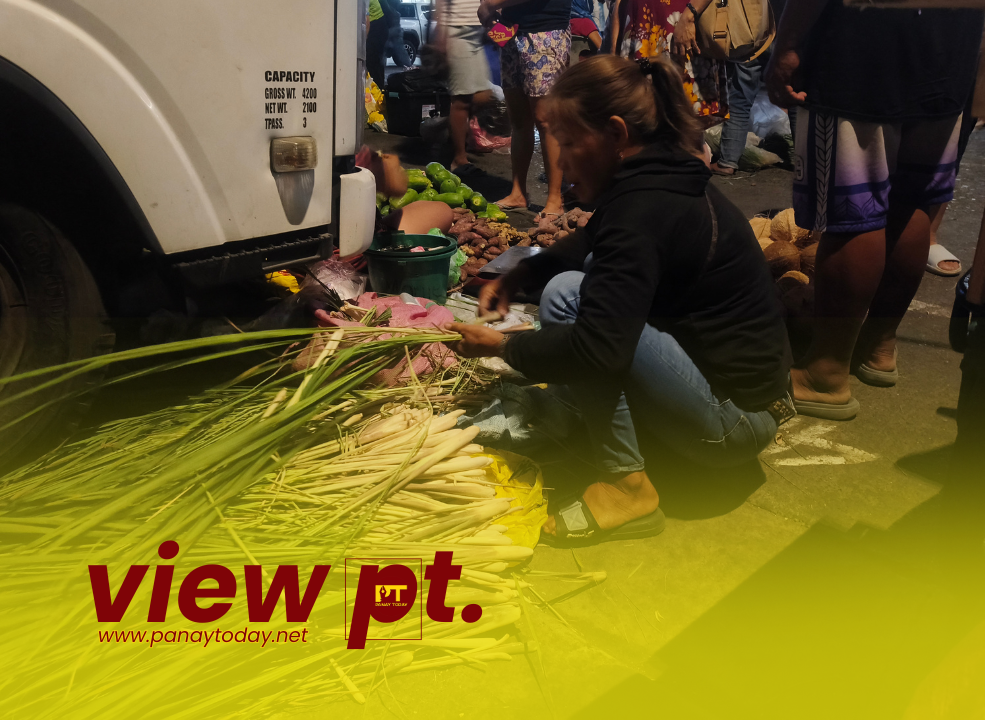
Hands that sort through kadyos under the sun, that slice through langka’s stubborn flesh, that carry the weight of baboy from market dawns. Hands that have memorized the labor of survival— now open, now pleading, now threatened by a future that would rather erase them in the name of privatization.
For ambulant vendors, to sell is not merely to feed a city— it is to keep hunger away from their own homes.
For decades, the culture of bolante has moved like a quiet current through Iloilo and beyond— pushing carts, calling out prices, weaving themselves into the everyday pulse of the streets.
They are not incidental. They are essential.
They carry affordability in their baskets, culture in their calls, and community in every exchange of coin and trust. They are an economy that bends but does not break, a living archive of how food is shared, not displayed.
And so we must ask— if not for the bolanteros, who gathers the ingredients of our heritage? Who makes possible the dishes we now celebrate?
We say we love fresh food—that we want to touch it, smell it, feel its life in our hands. But what happens when all that is left are sealed plastics and fluorescent aisles, overpriced, overhandled, standing where our vendors once stood?
What happens when the spaces of the many are traded for the comfort of the few?
Perhaps we have mistaken what makes a city of gastronomy. It is not glass towers, nor curated markets, nor air-conditioned spaces that exclude more than they welcome. It lives in sidewalks slick with rain, in crowded stalls, in the places where no one is too poor to belong.
It lives where labor is visible. Where food is touched by real hands. Because food— has always been political.
So the next time we lift a spoonful of KBL, or tear soft puto into the broth of La Paz Batchoy, may we remember:
This is not just a meal.
It is the work of hands that have long given and long endured—hands that now close into fists, not only in anger, but in defiance—ready to protect and to reclaim what has always been theirs.