
 By
By by Tiffany Xu
“All they think about is importation, importation! Where else do you see a country with vast fishing grounds importing galunggong? With massive farmlands but is importing onions?” were the words of those frustrated from the national importation fiasco. Except this time, the people are pent-up on sugar.
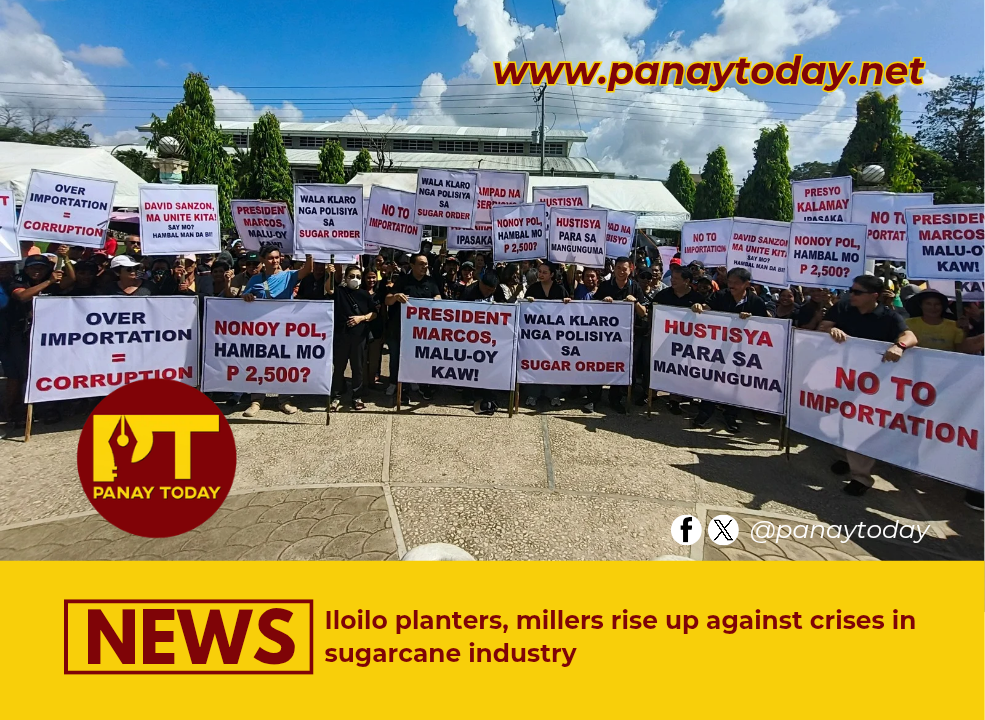
In Plaza Paloma, Passi City, nearly 800 locals from several municipalities of Iloilo protested against low prices and unrestricted importation of sugar.
The event, led by the Panay Federation of Sugarcane Farmers (PANAYFED) last Jan. 22, sought to mark a show of solidarity against continuous, systematic neglect over the sugar industry.
Market imbalances, misplaced priorities
In Iloilo, a picul (50-kg bag) of sugar sells for at least P2,100 to P2,200 as production costs reach P2,500 and above. Similar to other regions such as Negros, this is the lowest in five years according to the National Federation of Sugarcane Planters (NFSP).
During the last three months of 2025, a P7.3-billion loss in sugar sales including molasses was also observed, said the Confederation of Sugar Producers’ Associations (CONFED).
The retail price of refined sugar fetches P70/kg while imported sugar can drop as low as P25/kg at wholesale price. Hence despite having the highest annual production last 2025, the flood of imports caused local oversupply, with storage and processing facilities reeling in from deficits.
In 2025, it can be recalled that 424,000 MT of refined sugar was imported by only three approved traders. Protesters at Passi urged the administration to a the alleged sugar ‘cartels’.
They also lambast the Sugar Regulatory Administration (SRA) for having ‘no clear policies’ in its sugar orders.
“This so-called transparency in the sugar order cannot be felt. It will declare to export 100,000 MT of sugar, but the traders who agree to export it will be in the red because world market prices are very low,” said Rene Michael French of Jalasig Sugarcane Planters Association (JSPA).
The Philippines has continued its US Raw Sugar Tariff-Rate Quota World Allocation agreement for the third consecutive year. SRA identifies eligible volunteers ‘willing to help the government fulfill its allocation despite the lower return, additional cost, and uncertainty inherent in the exportation’ and gives them priority in future importation programs.
Small farmworkers and ARBs, most dispossessed
Among the approximately 6,000 members in JSPA, 90 percent are tillers who receive a less-than-minimum-wage cut from the 60-40 dividends system typical in landlord-worker relationships.
Jaudancio Galleno, a planter of the 5,500-ha Hacienda Dulalia, complained that when sugar prices soar, the most affected farmworkers are unable to even request for salary increases.
Many of these farmers are also agrarian reform beneficiaries (ARBs) such as Andres Barbero, a sugarcane planter since the 1980s, who is yet to receive his official land title from the Department of Agrarian Reform (DAR).
Similarly in Negros where a simultaneous picket was conducted, the National Federation of Sugar Workers (NFSW) claims that 80 percent of the 380,000 Filipinos in the sugar industry are small farmer and ARBs who end up selling their land to foreigners or their landlords when loans cannot be paid.
Saving the industry before it is too late
Being the second most important crop in the province next to rice, the future demise of the sugarcane industry may manifest in the displacement of local producers, deeper debt among farmworkers, and eventually farm abandonment, protesters say.
The rally’s many demands include halting annual importations, and raising the farmgate price to P3,000 or P2,500 at the very least.
Meanwhile, NFSW asserted in their statement that a temporary price hike and moratorium on importations is insufficient if it does not completely scrap the import policy altogether.
Aside from the passage of another manifesto to the SRA, protesters mention that greater unrest and mass demonstrations will only persist should the government not heed their calls.
“We are enjoining all planters of rice, sugarcane, and other agricultural products to unite towards a larger call in ultimately ending importation, the neoliberal and imperialist manifestations of anti-peasant frameworks. We should aim for genuine agrarian reform”, said Lucia Capaducio in Hiligaynon, a farmer-leader from Paghugpong sang mga Mangunguma sa Panay kag Guimaras (PAMANGGAS).
###